

Trip, Stumble and Fall: Everybody Does It
June 14, 2024 | Senior Safety
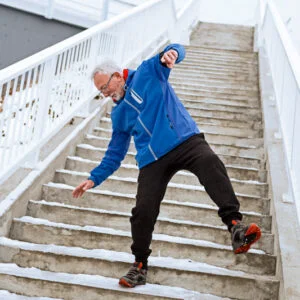
Fall risk in older adults is one of the most serious and overlooked health threats in America today. However, falls are not just an older adult problem. People of all ages trip, stumble, and fall every year. Understanding why falls happen — and what drives the risk up with age — is the first step toward preventing them.
By Steven C. Fox, D.O., Geriatric and Disability Medicine, Founder of Resilient80s
Falls Happen at Every Age — But the Risk Grows Over Time
Many people assume only older adults fall. In fact, public health research tells a different story. Each year:
- 18% of young adults aged 20 to 45 experience a fall
- 21% of middle-aged adults aged 46 to 65 experience a fall
- 35% of adults aged 65 and older experience a fall
- 50% of adults over 80 fall at least once per year
Furthermore, approximately 7 out of 10 people who fall sustain some kind of injury. Young adults most often injure their wrists, hands, knees, and ankles. Middle-aged adults tend to injure their knees. Older adults, however, most commonly injure their hips, knees, and heads. In fact, falls are a primary cause of traumatic brain injuries in the United States.
Why Fall Risk in Older Adults Increases With Age
Several factors drive the rise in fall risk as people get older. These include:
- Multiple chronic illnesses and medications that affect coordination and alertness
- Decreased vision, which reduces spatial awareness
- Hearing loss, which disrupts balance signals to the brain
- Muscle weakness, which reduces stamina and coordination
- Loss of inner ear hair cells, which directly impairs equilibrium
According to the Centers for Disease Control and Prevention, falls are the leading cause of injury among adults over 65. Therefore, addressing even one of these factors can meaningfully reduce your risk.
Two Major Fall Risk Factors You Can Actually Change
The good news is that two of the biggest fall risk factors are reversible. First, muscle weakness responds well to regular exercise. Strength training and walking can slow and even reverse muscle loss at any age.
Second, while humans cannot regenerate lost inner ear hair cells — unlike birds and fish — the body has a remarkable ability to adapt. Other neurological and balance-stabilizing systems can be retrained and strengthened. Therefore, a consistent daily balance practice can significantly improve stability even after inner ear function declines.
Why Balance Is Central to Reducing Fall Risk in Older Adults
Good balance is essential for daily independence, functioning, and even longevity. When you walk, you spend roughly 40% of the time on one leg. As a result, one-leg stability directly affects your safety with every step you take.
Research shows that not being able to stand on one leg for 10 seconds or more doubles the risk of death from any cause within 10 years. Moreover, fall risk rises sharply between the ages of 70 and 80. Therefore, this is the most critical decade to build and maintain balance.
The following two habits produce the greatest results:
- Walk more every day. Even moderate daily walking rewires your nervous system and strengthens the muscles that keep you upright.
- Practice a daily one-leg balance exercise. This simple exercise rebuilds the neurological pathways that control stability and coordination.
The Psychological Impact of a Fall
A fall with injury is often a life-changing event. It causes physical limitations, loss of confidence, and a persistent fear of falling again. Moreover, research shows that the fear of falling actually increases your risk of falling further. It leads to reduced activity, weaker muscles, and greater instability over time.
Whether or not a fall causes injury, it is the strongest predictor of a future fall. Therefore, acting before your first serious fall — or after your most recent one — is equally important.
What You Can Do Today to Lower Your Fall Risk
Start by knowing where you stand right now. Dr. Fox has developed a free online program to assess your current functional age, balance, and stamina. The assessment includes a short questionnaire and two simple physical tests. It takes only a few minutes and gives you a clear, personalized starting point.
Take the free Resilient 80s Functional Age and Balance Assessment today. Then commit to daily walking and balance practice. Small, consistent steps reduce fall risk in older adults more effectively than any single intervention.