
30 Seconds to Better Balance
July 18, 2024 | Balance
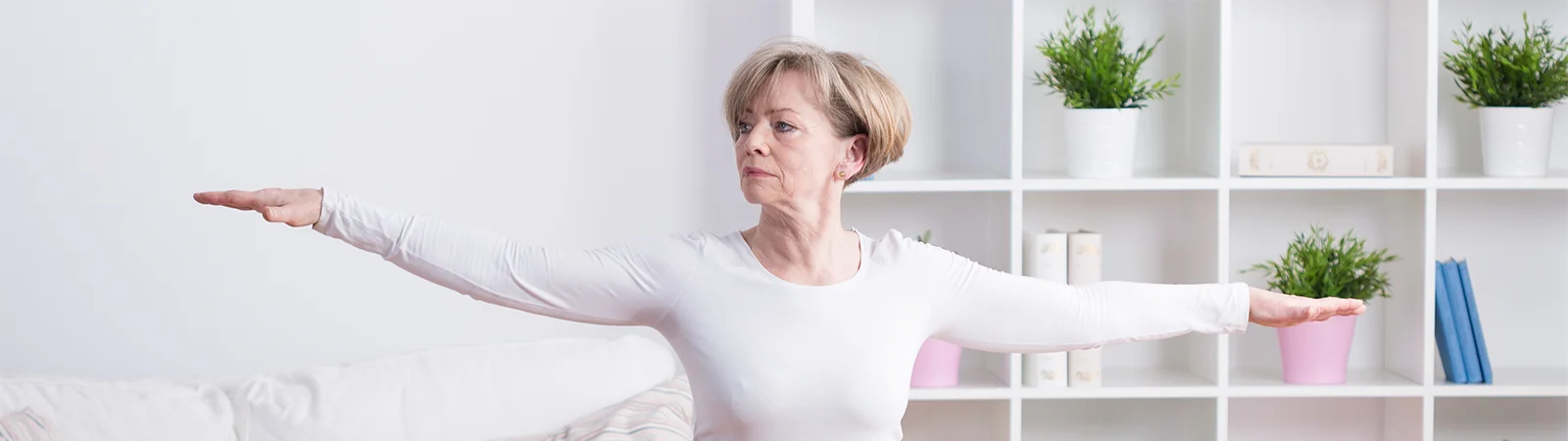
Balance exercises for older adults are one of the most powerful tools for staying independent as you age. Good balance directly affects your ability to live safely at home, move freely, and maintain a high quality of life. In fact, standing on one leg for up to 30 seconds is a key indicator of your true functional age — and it is a skill you can improve starting today.
According to geriatric medicine specialist Dr. Steven Fox, balance is one of only two physical functions that reliably declines with age. The other is kidney function. Therefore, protecting and improving your balance is one of the smartest health investments an older adult can make.
Why Balance Matters More Than Most People Realize
Poor balance is not just uncomfortable — it is dangerous. Falls are the leading cause of injury among adults over 65, according to the Centers for Disease Control and Prevention. Furthermore, research shows that not being able to stand on one leg for 10 seconds doubles the risk of death from any cause within 10 years.
However, the reverse is also true. Standing on one leg for 30 seconds lowers your functional age to that of a 60-year-old. As a result, a simple daily balance practice can add healthy, independent years to your life.
How to Do the 30-Second Single-Leg Stance
This exercise is safe, simple, and effective. Follow these steps to get started:
Step 1: Find Your Support Place one hand against a wall or on a stable chair. Make sure your feet are firmly on the ground before you begin.
Step 2: Raise One Leg Slowly Keep your hand lightly on the wall or chair. Then slowly lift the opposite leg. Look straight ahead and focus on a fixed object in front of you.
Step 3: Use Your Head Position Your head weighs about 10 to 12 pounds. Tilting it slightly to the side — over your standing leg — helps your body find its center of balance.
Step 4: Use Your Arms If Needed Try to keep your arms still. However, do not hesitate to use them to regain balance if you start to wobble.
Step 5: Hold and Repeat Hold the position for 30 seconds. Repeat several times on each side. Then switch arms and legs and repeat the full set.
Tips for Better Results
Practice every single day. Improving balance requires building new pathways in your nervous system and muscles. Therefore, commit to at least one practice session per day. Consistency matters more than duration.
Shoes or no shoes? Either works — choose whatever feels most comfortable. However, avoid high heels entirely, as they shift your center of gravity and increase fall risk.
Be patient with yourself. Everyone struggles at the beginning. Do not be discouraged by early wobbling. With regular practice, you will reduce your reliance on the wall or chair and build real, lasting stability.
How Balance Connects to Your Functional Age
Your balance score is a direct measure of your functional age. The World Health Organization defines healthy aging as maintaining the functional ability that supports well-being in older age. Balance is central to that ability.
At age 75, the normal benchmark is holding a single-leg stance for 18 seconds. If you can hold it for 30 seconds, your functional age drops to 60. If you can only hold it for 10 seconds, your functional age rises to 83.
Therefore, every second you add to your single-leg stand is a real, measurable improvement in your health and independence.
Know Your Functional Age and Track Your Progress
Balance exercises for older adults work best when combined with regular self-assessment. Take the free Resilient 80s Functional Age Test to measure your current functional age. Repeat it over time to track your improvement. The test is secure, private, and takes only a few minutes.
Start with 30 seconds. Build from there. Your balance — and your future — are both within your control.