
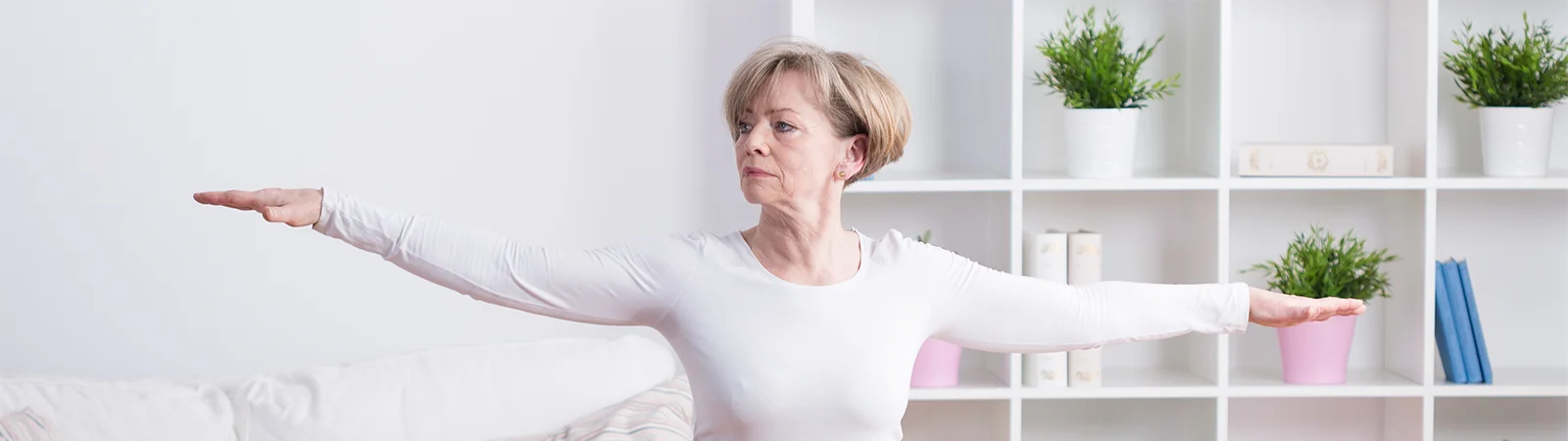
Best Balance Exercises for Seniors Over 60
September 18, 2026 | Uncategorized
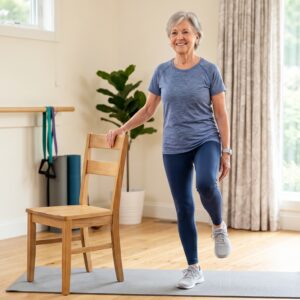
The best balance exercises for seniors over 60 progress from simple to challenging: feet-together stands, heel-to-toe (tandem) stands, single-leg stands, heel and toe raises, sit-to-stands, and gentle dynamic moves like weight shifts and marching – plus tai chi for whole-body control. All can be done at home with a wall or sturdy chair for support and no equipment. The key is gentle, progressive challenge a few minutes most days. Improvement is usually noticeable within a couple of weeks, because balance responds faster to training than almost any other ability.
Before You Start: Safety First
Balance exercises work by challenging your stability on purpose – which means there is always a small, deliberate risk of a wobble. A few simple precautions make them safe.
- Always have support within reach. Stand beside a kitchen counter, a wall, or a sturdy chair you can grab.
- Wear supportive, non-slip shoes or go barefoot on a non-slip floor – not socks or loose slippers.
- Progress gradually. Only move to a harder version once the current one feels secure.
- Have someone nearby when trying a new, harder exercise for the first time, especially if you have a falls history.
- Stop if you feel dizzy or unwell, and check with your GP before starting if you have significant balance problems, recent injury or a medical condition affecting your balance.
If you already know your balance is poor, it is worth identifying the warning signs and underlying causes first – our guide to the warning signs worth addressing first helps you gauge where to begin safely.
Beginner Balance Exercises
Start here if balance work is new to you or you feel unsteady. Master these before progressing.
1. Feet-together stand
Stand with your feet touching side by side, hands hovering near support. Hold for 10–30 seconds. This narrows your base slightly and is a gentle first challenge. Build up the hold time before moving on.
2. Heel-to-toe stand (tandem stance)
Place one foot directly in front of the other, heel touching toe, as if on a tightrope. Hold 10–30 seconds, then switch which foot is in front. This challenges front-to-back stability — the control you use walking in a straight line.
3. Heel raises
Holding a counter, rise up onto the balls of your feet, hold briefly, and lower slowly. Repeat 10–15 times. This builds calf strength and ankle control, both important for steady walking.
4. Toe raises
Holding support, rock back onto your heels, lifting your toes off the floor. Repeat 10–15 times. This works the muscles at the front of the shin that help prevent trips.
Intermediate Balance Exercises
Progress to these once the beginner moves feel secure and you can hold the stands comfortably.
5. Single-leg stands
The classic. Holding support lightly, lift one foot a few inches off the floor and balance on the other leg for 5–20 seconds, then switch. Single-leg stands are one of the most effective balance builders because they demand that all your stability systems work at once. Progress by holding support with one finger, then briefly letting go.
6. Sit-to-stands
From a sturdy chair, stand up and sit back down without using your arms if you can, 8–12 times. This builds the lower-body strength that catches you when balance briefly fails – the strength-and-balance link in one move.
7. Weight shifts
Standing with feet hip-width apart, slowly shift your weight fully onto one foot, hold, then onto the other. This trains the controlled weight transfer that walking and turning require.
8. Marching in place
Holding support if needed, march slowly, lifting each knee to a comfortable height. This is a gentle dynamic exercise – balancing while moving – which is closer to real-world demands than static holds.
Advanced and Dynamic Exercises
Once the intermediate moves are comfortable, these add real-world, moving challenge. Keep support nearby.
9. Heel-to-toe walking
Walk in a straight line placing the heel of one foot directly in front of the toes of the other, as if on a tightrope, for 10–20 steps. This is dynamic tandem balance and closely mirrors steady walking.
10. Eyes-closed stands (with support)
Perform a feet-together or tandem stand with your eyes closed, keeping a hand on support. Removing vision forces your inner ear and position sense to work harder – directly training the systems that decline with age. Only attempt this with firm support in reach.
11. Single-leg stand with head turns
Balance on one leg while slowly turning your head side to side. Adding head movement challenges the vestibular system specifically, which is often the weakest link.
Why Tai Chi Deserves a Special Mention
Of all structured activities for balance, tai chi has some of the strongest supporting evidence. This gentle, flowing practice combines slow weight shifts, controlled movement, coordination and mental focus – training balance as an integrated whole rather than in isolated pieces.
Research on tai chi for older adults has repeatedly found benefits for balance and reductions in fall risk, and it has the added advantages of being low-impact, joint-friendly, sociable when done in a class, and sustainable long-term because people enjoy it. If you want one activity that packages much of this article into an enjoyable routine, tai chi is an excellent choice.
Don’t Forget Core Stability
Core stability – the strength of the muscles around your trunk, abdomen and lower back – is the quiet foundation of balance. Your core is what keeps your upper body controlled over your base, so a weak core makes every balance task harder.
Gentle core work supports all the exercises above:
- Seated marches – sitting tall, lift each knee in turn.
- Standing side bends – holding support, lean gently side to side.
- Gentle torso rotations – seated or standing, turn slowly side to side.
You do not need floor exercises or planks; for most older adults, upright core work is safer and translates more directly to balance.
The best routine is the one you’ll actually do. A few minutes most days, progressing gently, beats an ambitious plan you abandon in a week.
Building Your Routine
You do not need to do every exercise. A simple, effective daily routine:
- Warm up – a minute of marching in place.
- Two or three balance holds – at your current level (e.g. tandem and single-leg stands).
- One strength move – sit-to-stands or heel raises.
- One dynamic move – weight shifts or heel-to-toe walking.
Five to ten minutes most days is enough to produce change. Balance improves fast, so retest yourself periodically to see progress and know when to advance.
Balance rarely works alone – pairing it with stamina work produces broader resilience, which is why we cover why balance and stamina work together. And if standing exercises are difficult for you right now, start with modified options if mobility is limited and progress from there.
To track whether your routine is working, you can measure your improvement with a scored balance assessment before and after a few weeks of training.
Frequently Asked Questions
What are the best balance exercises for seniors?
The most effective progress from simple to challenging: feet-together stands, heel-to-toe (tandem) stands, single-leg stands, heel and toe raises, sit-to-stands, weight shifts and heel-to-toe walking. Tai chi is excellent for whole-body balance. All can be done at home with support nearby.
How often should seniors do balance exercises?
Most days is ideal – five to ten minutes daily produces faster, more durable improvement than occasional longer sessions. Balance responds quickly to consistent practice, with many people feeling steadier within two weeks.
Can balance be improved after 60?
Yes, and quickly. Balance responds to training at every age because much of the decline reflects disuse. Progressive balance exercise re-sharpens the sensing systems and strengthens the muscles that keep you steady, often with noticeable results in a fortnight.
Is tai chi good for seniors’ balance?
Yes. Tai chi has strong evidence for improving balance and reducing fall risk in older adults. It is low-impact, joint-friendly and trains balance as an integrated whole, and it tends to be sustainable because people enjoy it.
Are balance exercises safe to do at home?
Yes, with precautions: keep a wall, counter or sturdy chair within reach, wear non-slip footwear, progress gradually, and have someone nearby when trying a harder exercise for the first time. Check with your GP first if you have significant balance problems.
How long does it take to see improvement in balance?
Many people notice they feel steadier within about two weeks of consistent daily practice, because the nervous system adapts quickly. Measurable improvement on formal balance tests typically appears within four to eight weeks.
Key Takeaways
- Balance exercises work by progressive challenge – start simple, advance only when secure.
- Beginner to advanced: feet-together, tandem, single-leg, dynamic and eyes-closed stands.
- Pair balance holds with lower-body strength – strong legs catch you when balance slips.
- Tai chi and core stability both strongly support balance and are worth adding.
- A few minutes most days beats occasional long sessions; improvement comes fast.
Start Your Balance Plan – get your balance scored, then a progressive routine matched to your level. Start Your Balance Plan